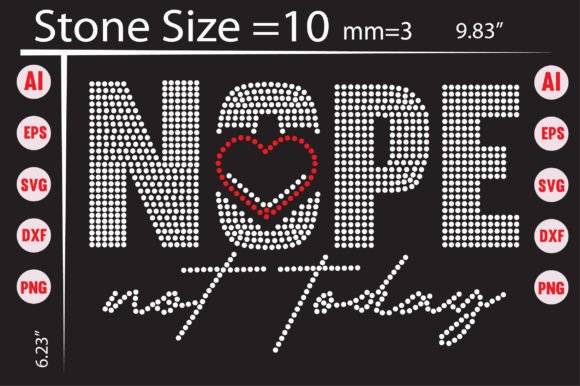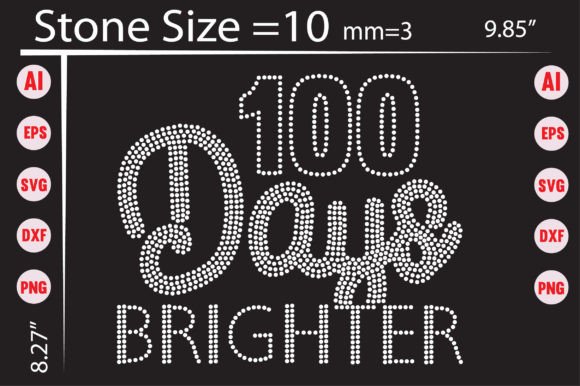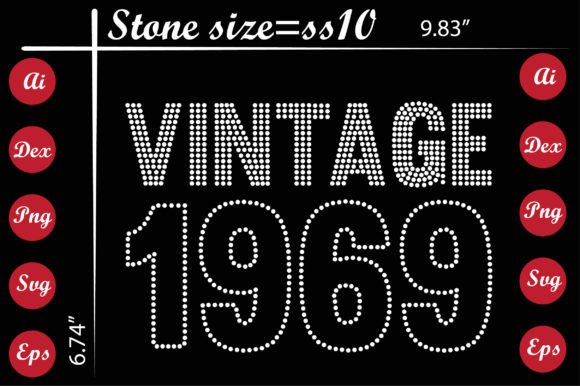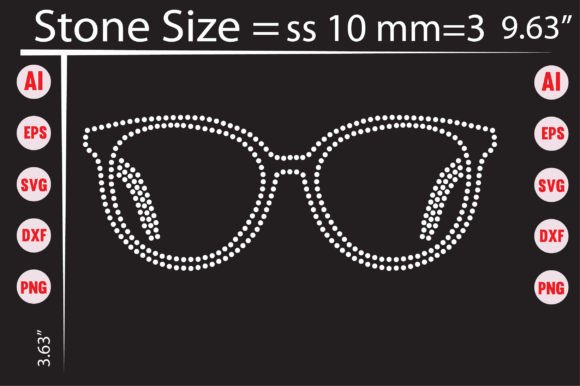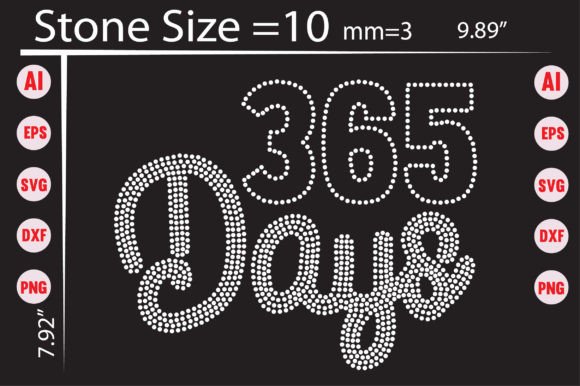
365 Days Rhinestone Templates: A Year of Creative Possibilities
When you're building a brand or launching a product line, consistency is everything. You need design assets that work as hard as you do—materials that are reliable, versatile, and ready to scale with your ambitions. That's exactly the kind of thinking behind the 365 Days Rhinestone Templates Design. It's not just a collection of files; it's a strategic toolkit built for creators who need professional results without the friction.
What Makes This Template Collection Stand Out
At its core, the 365 Days Rhinestone Templates Design is a comprehensive set of printable design templates optimized for rhinestone application. But calling it a "template set" undersells what you're actually getting. Each file is crafted at 300 DPI, which means sharp, clean output whether you're cutting vinyl, screen printing, or producing heat transfers. The collection arrives as an instant download—a ZIP folder packed with industry-standard formats: AI, EPS, SVG, DXF, transparent PNG, and JPEG.
That range of file types matters more than most people realize. If you're a small business owner running a Cricut or Silhouette machine, the SVG and DXF files are your bread and butter. If you're a designer handing off assets to a print shop, the EPS and AI files give you full editability in Adobe Illustrator. And if you're a crafter creating mockups for an Etsy listing, the transparent PNG files are ready to drop into any project without background removal hassles.
Real-World Applications for Designers and Entrepreneurs
Think about the last time you needed a design asset that could move across multiple platforms without falling apart. Maybe you started with a social media graphic, then needed the same visual on a t-shirt, then wanted it on a mug for a product launch. That workflow breaks down fast when your source files aren't built for flexibility.
The 365 Days Rhinestone Templates Design solves that problem by giving you editable vector-based files alongside high-resolution raster options. Here's where creators are putting these templates to work:
- Custom apparel – T-shirts, hoodies, and hats for print-on-demand shops or local merchandise runs.
- Drinkware and accessories – Mugs, tumblers, and water bottles with rhinestone or vinyl designs.
- Home décor – Cushions, wall art, and throw pillows that need crisp, scalable graphics.
- Promotional materials – Event giveaways, branded merchandise, and seasonal product drops.
- Digital content – Social media graphics, blog headers, and email marketing visuals.
The versatility here is practical, not theoretical. Because every file is editable, you can adjust colors, resize elements, and modify layouts to match your specific brand identity or project requirements. That level of control is what separates a premium design asset from a one-use download.
How File Format Variety Impacts Your Workflow
Let's talk about why having six different file formats actually saves you time instead of creating confusion. Each format serves a distinct purpose in a professional creative workflow:
- AI and EPS files are your master editables. Open them in Adobe Illustrator or Affinity Designer to make precise adjustments to paths, colors, and layer structure.
- SVG files are the standard for cutting machines. They maintain vector quality at any size, which is critical for clean cuts on vinyl and heat transfer material.
- DXF files offer broad compatibility with older cutting software and certain industrial machines.
- Transparent PNG files at 300 PPI give you print-ready raster images with no background, ideal for layering in Photoshop or Canva.
- JPEG files work well for quick previews, client presentations, or situations where a smaller file size is more practical.
Having all of these in a single download means you're not scrambling to convert files or request different formats from a designer. Everything you need is already there, organized and ready.
Choosing the Right Template for Your Project
Not every template in the collection will be right for every project, and that's by design. Here's a practical approach to evaluating fit:
Consider your production method first. If you're working with rhinestone templates specifically, the design's line weight and detail level need to match your stone size. Finer details work with smaller rhinestones but require more precision during application. Bolder, simpler designs are more forgiving and faster to produce.
Match the template's personality to your audience. A playful, decorative design works for a boutique gift shop but might feel out of place on corporate promotional materials. Look at the visual style—does it align with the tone your customers expect?
Test before you commit. Print a small sample or cut a test piece before running a full production batch. This is especially important when scaling designs up or down, since proportions and spacing can shift in ways that aren't obvious on screen.
Building a Consistent Brand with Reusable Assets
One of the most overlooked advantages of a template collection like this is how it supports brand consistency. When you have a library of professionally designed, editable files at your fingertips, you can maintain a cohesive visual language across every touchpoint—from your website to your product packaging to your Instagram feed.
Small business owners and content creators often struggle with this because they're pulling design assets from multiple sources. One logo comes from Fiverr, a social media template from Canva, and product graphics from a stock site. The result is a visual identity that feels fragmented. Working from a unified set of templates helps you build recognition and trust with your audience over time.
The 365 Days Rhinestone Templates Design gives you that foundation. It's a design asset that earns its place in your creative toolkit—not because it's flashy, but because it's functional, flexible, and built for the kind of real-world production work that keeps your projects moving forward.
Final Thoughts on Getting the Most from Your Download
Once you've downloaded the ZIP folder, take a few minutes to organize the files in a way that makes sense for your workflow. Create separate folders for vector and raster files, and consider labeling templates by project type or season if the collection includes date-specific designs.
If you're new to working with vector files, spend some time in Illustrator or a free alternative like Inkscape getting comfortable with basic edits—changing colors, resizing without distortion, and exporting for your specific cutting machine or printer. That small investment in learning pays off every time you use these templates going forward.
Ultimately, the value of the 365 Days Rhinestone Templates Design isn't just in the files themselves. It's in the time you save, the consistency you maintain, and the professional quality you bring to every project you touch.