Design Impactful School Marketing with Vector Billboards
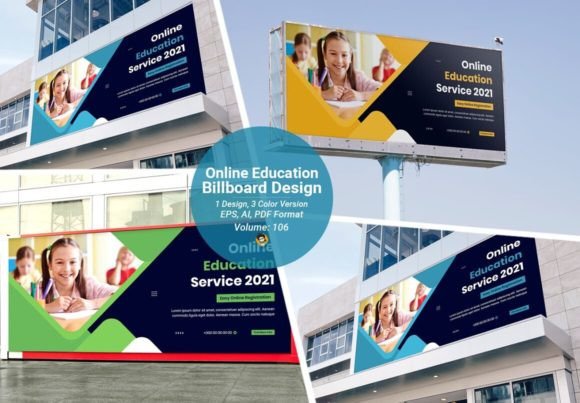
In the competitive landscape of educational marketing, visual communication is often the first point of contact between an institution and the community it serves. For designers, marketers, and school administrators, creating materials that are both professional and welcoming is a significant challenge. This is where a resource like the Kids School Billboard Templates collection becomes invaluable. Volume 106 offers a practical solution, providing a set of three distinct color versions in a full vector format, designed to streamline the creation of large-scale promotional graphics.
Understanding the core components of this design asset is the first step toward leveraging its potential. The package includes AI, EPS, and PDF files, ensuring compatibility with a wide range of professional software. The templates are built for a substantial 70x30 inch format at 300 DPI, making them suitable for everything from outdoor billboards to large indoor banners. The software support, spanning from Adobe Illustrator CS4 to the latest Creative Cloud versions, ensures accessibility for most design workflows. A key practical detail is the inclusion of free font download links within the help file, allowing for seamless replication of the design's intended typography. It's important to note that the provided files are templates; the stock photos used in the previews are not included, giving users the freedom to insert their own institution's imagery.
A Practical Framework for Educational Branding
The visual personality of the Kids School Billboard Templates is intentionally crafted to resonate with families. The style typically leans towards clean, modern typography paired with friendly, approachable color palettes. The three included color versions might range from classic, trustworthy blues and greens to more vibrant, energetic combinations, allowing designers to select an option that best matches a school's existing brand identity or the specific campaign's tone. This adaptability makes the templates a versatile foundation rather than a rigid design.
The real-world applications extend far beyond a simple roadside sign. Consider these practical uses:
- Open House and Enrollment Campaigns: Use the templates as the central visual element for banners, yard signs, and digital ads to create a cohesive and professional look across all touchpoints.
- Event Promotion: Adapt the design for school fairs, sporting events, or performances. The editable size makes it easy to resize for posters, flyers, and social media headers.
- Internal Branding: Repurpose the design for welcome signs, cafeteria menus, or hallway displays, ensuring the school's visual identity is consistent from the front gate to the classroom.
- Digital Presence: The vector files are perfect for creating sharp, scalable graphics for a school's website, email newsletters, and parent communication apps.
For a small business owner or a designer working with a local preschool, this resource eliminates the need to build large-format designs from scratch. It provides a professional starting point that can be customized with a school's logo, mascot, specific details, and authentic photography, saving hours of production time while maintaining a high standard of visual quality.
Strategic Customization for Maximum Engagement
Simply downloading a template is only half the battle. The effectiveness of the Kids School Billboard Templates lies in thoughtful customization. The first step is to integrate the school's core brand assets. This means placing the official logo prominently and ensuring any text updates use the correct brand fonts if they differ from the template's included typeface. The provided font links are a starting point, but consistency with the institution's established brand identity is paramount.
Next, consider the hierarchy of information. A billboard has seconds to communicate its message. The template's layout should guide the eye naturally. Typically, the school name or logo should be the largest element, followed by a clear, concise value proposition or call to action, such as "Enrolling Now" or "Open House Saturday." Contact information and website details should be legible but subordinate. This is where understanding visual hierarchy within the existing design is crucial.
Font pairing is another critical consideration. While the template includes a recommended typeface, you may need to add supplementary text for details or disclaimers. Choosing a complementary font pairing—perhaps a clean sans serif font for body text if the template uses a display font for headlines—enhances readability without clashing. Always test the design at a small scale to ensure text remains legible; what looks good on screen at 100% zoom might become a blur on a 70-inch sign if the font weight is too thin or the tracking is too tight.
Ensuring Professional Results from Template to Output
Evaluating the fit of these templates for a specific project requires a critical eye. Review the three color versions not just for aesthetic preference, but for context. A template with bright, primary colors might be perfect for an elementary school but less suitable for a high school or a learning center with a more subdued brand. The goal is to enhance, not contradict, the institution's perceived personality.
The technical specifications are designed for professional output. The 70x30 inch size at 300 DPI ensures the final print will be crisp and clear, a non-negotiable for outdoor advertising where first impressions are made from a distance. The vector-based AI and EPS files are particularly valuable, as they allow for infinite scaling without quality loss. This means the same design can be adapted for a small web graphic or a massive building wrap without needing to recreate any elements.
Finally, while the font files are provided for free, it's always good practice to verify the licensing for any additional fonts you introduce, especially for commercial projects. The included help file should clarify the usage rights for the provided typefaces. By combining the solid foundation of these design assets with strategic, brand-aligned customization, designers and marketers can efficiently produce materials that project professionalism, foster community trust, and effectively engage parents and students—the ultimate goal of any educational marketing effort.